
Cost-Effectiveness of Electronic Monitoring
A Program Evaluation | September 2026Electronic monitoring is working well for the population it was expanded to serve. Among mandatory supervised release offenders, monitoring decreases reincarceration roughly 14 percentage points, keeps offenders free from prison over 100 days longer, and does so at a cost of less than $7 per avoided prison day. However, the result for probationers is different. While electronic monitoring should continue to be targeted for mandatory supervised release, follow up evaluations should be done to determine other best use cases.
Report Summary
Key Findings
- Electronic monitoring is effective at reducing recidivism for offenders on mandatory supervised release.
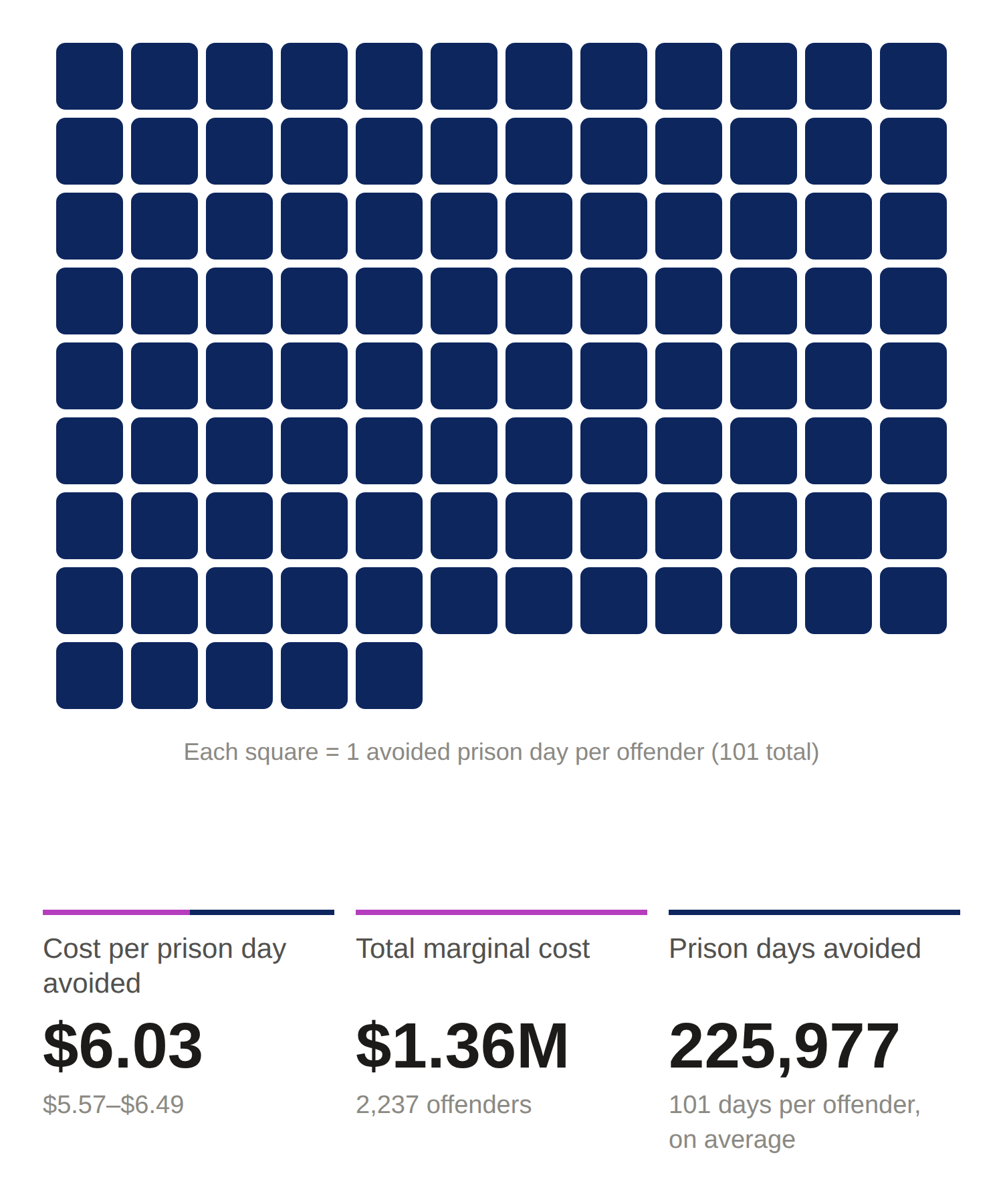
- It cost the state of Alabama roughly $6.03 in electronic monitoring expense per prison day avoided.
- Electronic monitoring may have harmful effects on probationers, particularly those assigned a lower risk.
Recommendations
- A follow-up evaluation should be conducted to determine the marginal cost of a prison day and the other benefits associated with reduced crime and avoided incarceration.
- A follow-up evaluation of probationers on electronic monitoring should be conducted to determine the effect of electronic monitoring. If possible, the evaluation should utilize a randomized control design.
Cost-Effectiveness of Electronic Monitoring
The Alabama Bureau of Pardons and Paroles (Bureau) began its current electronic monitoring program in 2019 as an emergency response to address intensive supervision needs. In 2021, Act 2021-549 was passed and signed into law. This law amended Section 15-22-26.2 of the Code of Alabama concerning the mandatory release of certain offenders from custody of the Alabama Department of Corrections to supervised release under the Bureau prior to the expiration of their sentence – known as mandatory supervised release. The act made three key requirements that affect the Bureau:
- Mandatory supervised release for all offenders except those convicted of a sex offense involving a child.
- A paroled offender or an offender released pursuant to mandatory supervised release be “subject to electronic monitoring for a period of time determined by the Director of Pardons and Paroles.”i
- The Bureau be responsible for the costs of electronic monitoring. (Previously, offenders could be responsible for the costs.)1ii
Coinciding with the expansion of mandatory supervised release in FY22 as a result of Act 2021-549, the Bureau began receiving $800,000 from the state General Fund for its electronic monitoring program. This funding was used to expand electronic monitoring “statewide” and to include other types of offenders beyond violent sex offenders:iiiiv
- Violent Class A Offenders
- High Risk Offenders
- Very High-Risk Offenders
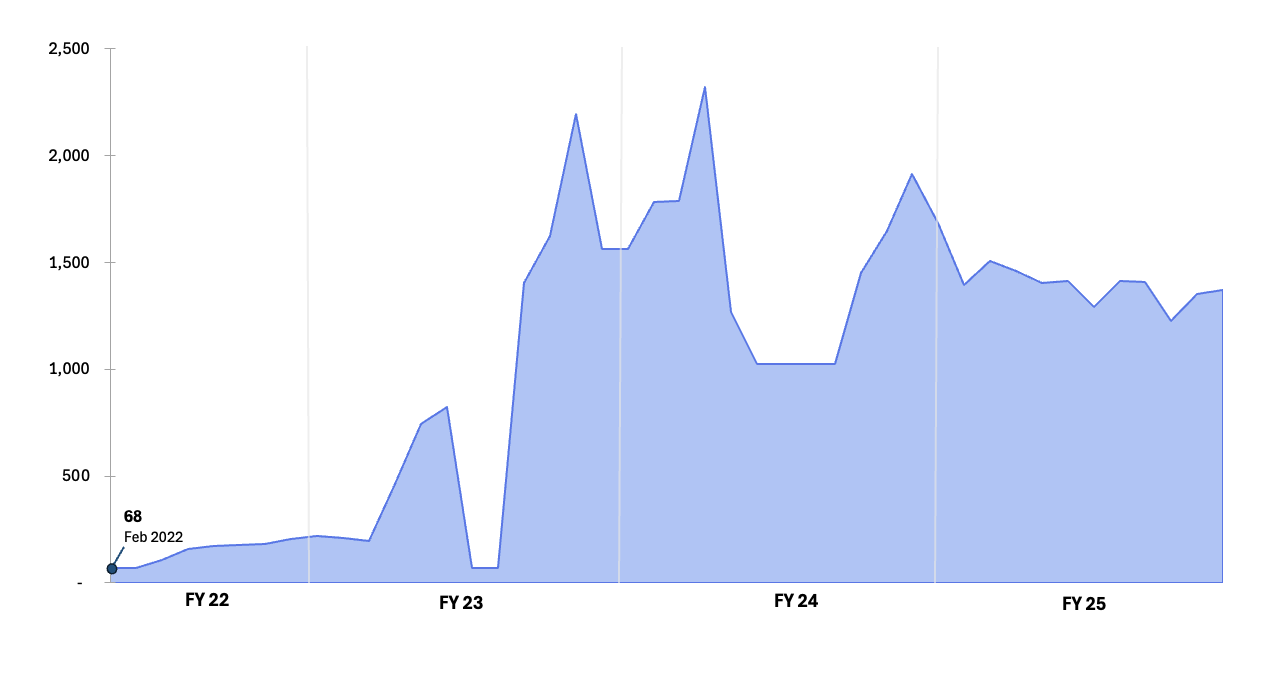
The expansion of the program resulted in a substantial increase in the average number of monthly offenders in the electronic monitoring program. In February of FY22, there were only 68 total offenders being supervised. In FY25, electronic monitoring averaged more than 1,400 offenders per month. See Figure 1.
In addition to state funding, the Bureau has received grant funding from the federal Bureau of Justice Assistance. Some of the costs associated with electronic monitoring are covered by two distinct grants through the Swift, Certain, Fair program.
It is important to note that while the Bureau contracts for electronic monitoring devices and monitoring software, it still maintains full supervision responsibilities over offenders, including responding to alerts.
Purpose and Scope of the Evaluation
This evaluation sought to:
- Evaluate and establish benchmarks of efficiency for the delivery of electronic monitoring by the Alabama Bureau of Pardons and Paroles for adults on state probation or parole supervision, including mandatory supervised release.
- Evaluate whether electronic monitoring for those offenders is cost-effective relative to standard supervision practices.
To establish benchmarks of efficiency, ACES identified potential productivity metrics that would aid in understanding how well the program operates. Although there were some data limitations, the following three metrics were produced:
- Cost per offender
- Cost per active offender day
- Cost per non-recidivist
After establishing the benchmark values, the outcomes of offenders on mandatory supervised release who received electronic monitoring were compared with those of offenders under traditional supervision to assess the cost-effectiveness of electronic monitoring.
See Data and Methodologies for more information and details of the analysis.
Summary of Findings
Electronic monitoring is effective at reducing recidivism for offenders on mandatory supervised release. Across multiple statistical models, electronic monitoring was found to decrease overall reincarceration, resulting in an average of 101 prison days avoided.
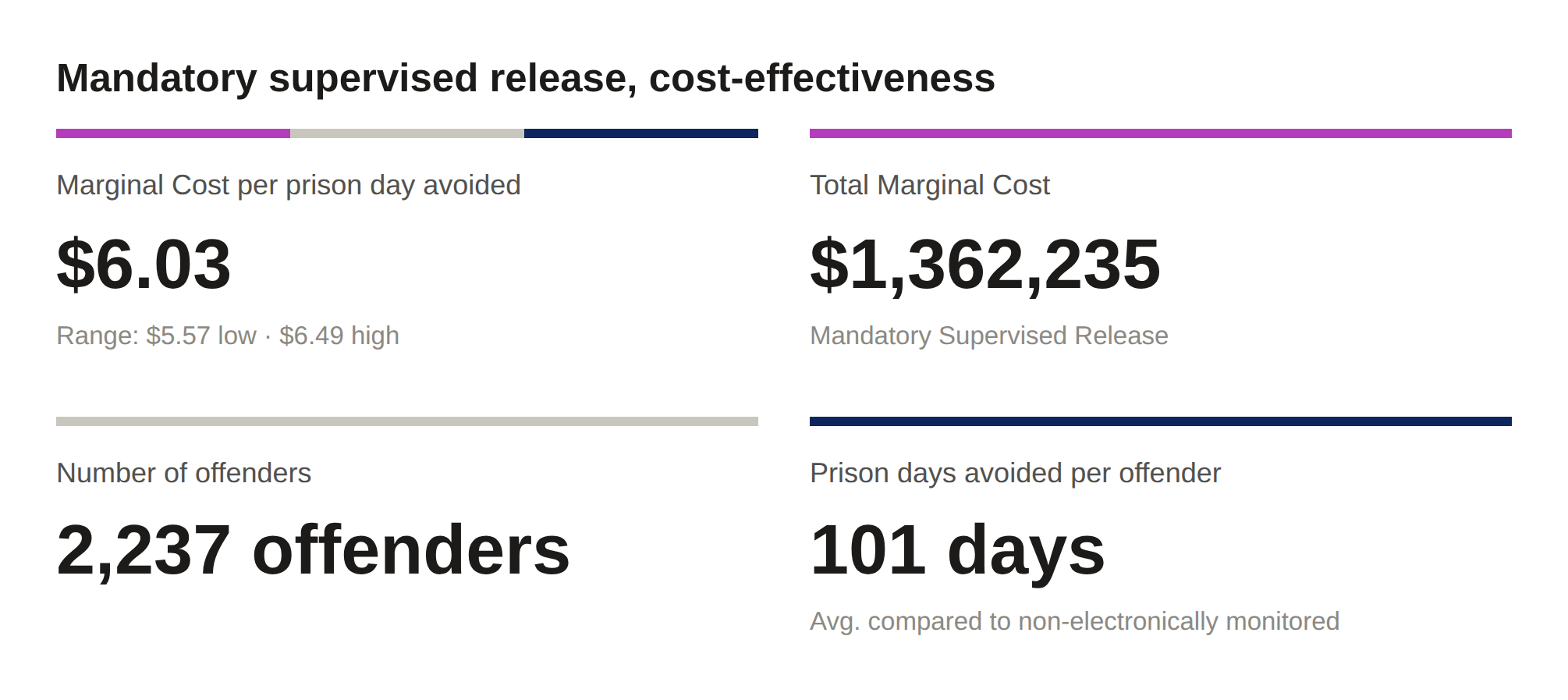
It cost the state of Alabama roughly $6.03 in electronic monitoring expense per prison day avoided. The marginal cost per unique offender is $609. Because of the positive effect of avoided prison days for offenders on mandatory supervised release, the state’s cost to produce an avoided prison day using electronic monitoring remains low.
Electronic monitoring resulted in increased recidivism for probationers. Compared to a control group, electronic monitoring was associated with a 15 percentage point increase in recidivism among probationers. However, the electronic monitoring group was slightly younger than the comparison group at the start of supervision, and age could not be adequately balanced between the two groups. Since younger age is linked to higher recidivism,vi this imbalance may have influenced the results.
Detailed Findings and Recommendations
1.0 Benchmarks of Efficiency
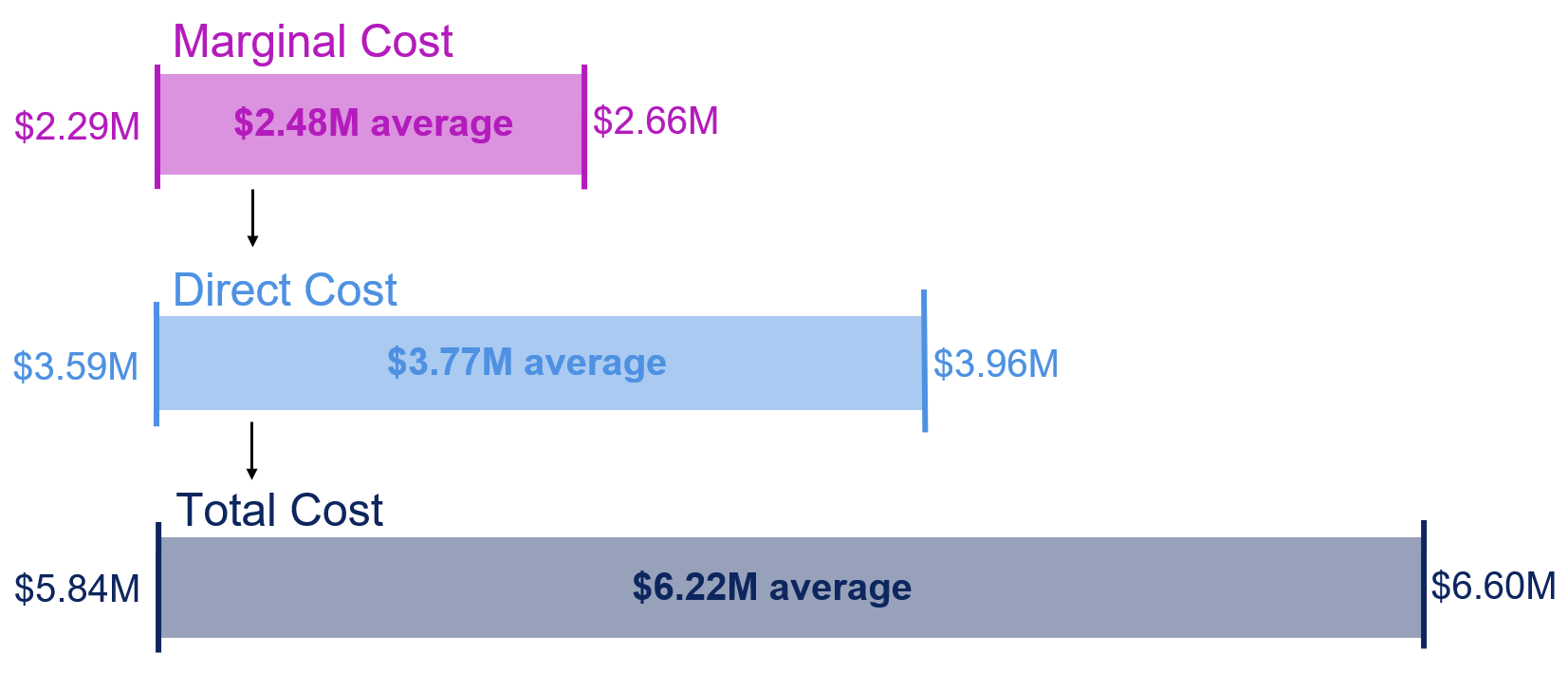
Efficiency measures the cost of producing an outcome – what is spent relative to what is received. This evaluation looked at cost from three perspectives:
- Marginal cost – what it costs to add one more person to the program once the equipment and staff are already in place.
- Direct cost – the day-to-day expenses tied straight to the program, such as the GPS units, full-time staff, and monitoring for after-hours alerts. This includes the total marginal cost.
- Total cost – everything the state pays to run the program, including expenses outside the direct program budget, like administrative overhead and staff benefits.
Because this evaluation did not include the full cost of traditional supervision, the analysis reflects only the electronic monitoring piece, based on one year of costs (FY25) and one year of outcomes (FY25).
To develop annual cost estimates, ACES examined financial records including vendor invoices, expenditure reports, overtime reports, and payroll data covering salaries and benefits. Because there is no system that separates time spent on electronic monitoring tasks versus other responsibilities, time estimates were developed based on surveys and interviews.
Field officer time estimates come from site visits to district offices and Day Reporting Centers. ACES interviewed probation and parole officers, observed monitoring work, and timed each task. Observed activities included device installation, removal, cleaning, and reinstallation. Officers gave consistent estimates of the daily monitoring load.
Due to the varying nature of officer caseloads and administrative time spent on electronic monitoring, a range of cost estimates was produced with averages being reported. See Figure 2 and Data and Methodologies for more detail.
1.1 Cost per Offender
In FY25, there were 4,068 offenders electronically monitored by the Bureau. Of these offenders, 55% were on mandatory supervised release, 23% were on parole, and 19% were on probation.2 The total cost of electronic monitoring in FY25 was $6,212,654.
| Cost level | Low | Average | High |
|---|---|---|---|
| Marginal Cost | $563 | $609 | $655 |
| Direct Cost | $881 | $928 | $974 |
| Total Cost | $1,435 | $1,527 | $1,622 |
The direct cost associated with electronic monitoring in FY25 was just under $3.8 million. This results in a direct cost per offender of $928. Among the direct costs associated with electronic monitoring, $1.6 million (42%) is monitoring device fees which makes up 57% of the marginal cost of delivery.
1.2 Cost per Active Offender Day
An alternative for assessing the cost of electronic monitoring is to track the daily cost per offender. Since offenders were on electronic monitoring for an average of 104 days in FY25, the cost per active offender day provides a better benchmark for understanding the resources required to operate the program.
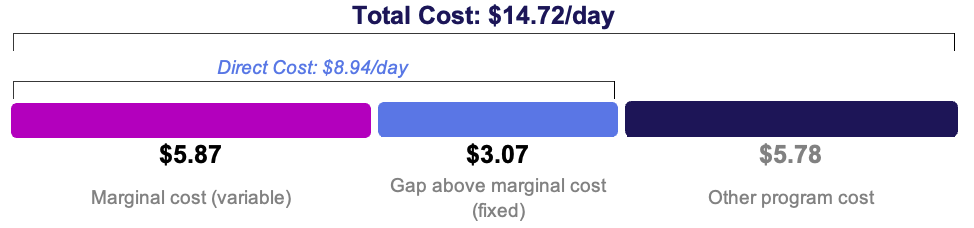
For this analysis, the marginal cost of $5.87 per active offender day represents the incremental cost of monitoring additional offenders and will vary with the number of offenders being monitored. This benchmark may be used by the Bureau when determining the most appropriate duration for an offender to be on electronic monitoring and the cost associated with it.
Additionally, the difference between direct cost and marginal cost ($3.07 per active offender day) varies with the number of offenders electronically monitored. These two price points could help determine if additional dedicated staff are warranted. See Figure 3.
1.3 Cost per Non-Recidivist
One of the most sought outcomes for reentry3 and supervision is a decrease in future criminal behavior. The Bureau defines subsequent criminal behavior using a recidivism indicator that measures any incarceration with the Alabama Department of Corrections within three years of beginning supervision. This metric is used by the Bureau as a proxy for future criminal behavior.
Based on previous ACES evaluations, Alabama’s 36-month reincarceration recidivism historically ranges from 24-40% for those formerly incarcerated or subject to incarceration (see Service Assessment of Community Corrections Programs (PDF, opens in a new tab) and Service Assessment of Correctional Education (PDF, opens in a new tab)). The rate can vary significantly depending on the criminal history, age, and education of the offender among other factors. To date, there are no publicly available reincarceration recidivism numbers for offenders only on probation.
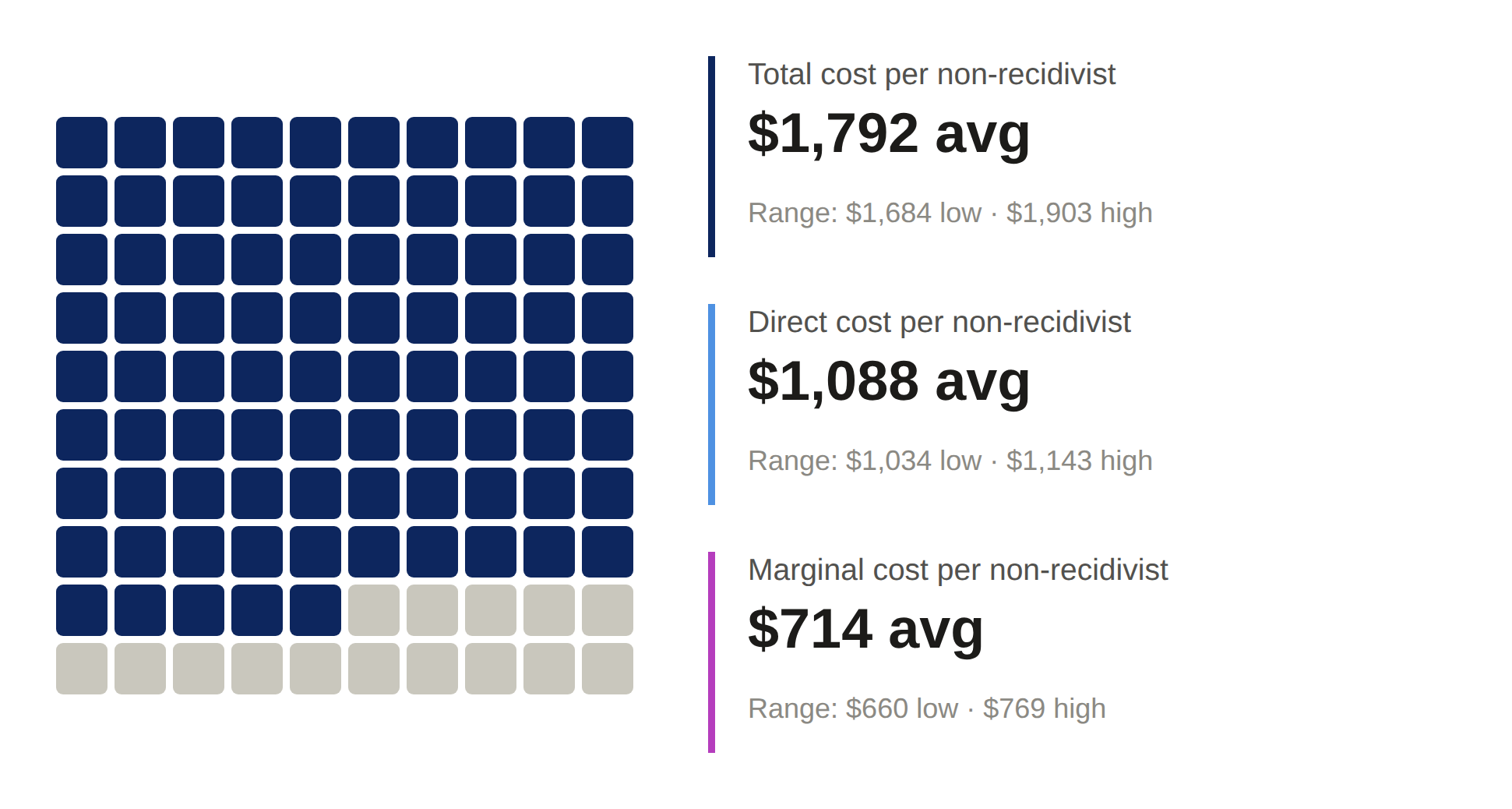
Of the 4,068 offenders who received electronic monitoring in FY25, 3,467 (85.2%) did not recidivate within the fiscal year. Figure 4 shows how the costs break down per non-recidivist.
2.0 Cost-Effectiveness of Electronic Monitoring
Cost-effectiveness analysis builds on the efficiency benchmarks to determine the cost to produce a positive outcome. This requires evaluating the outcomes of those offenders who received electronic monitoring to similarly situated offenders who did not receive electronic monitoring. Since the majority of offenders were on mandatory supervised release, it was necessary to analyze the effects of electronic monitoring for the three sub-groups of offenders based on supervision type (mandatory supervised release, Parole, and Probation) rather than as a whole population.
2.1 Effect of Electronic Monitoring on Reincarceration
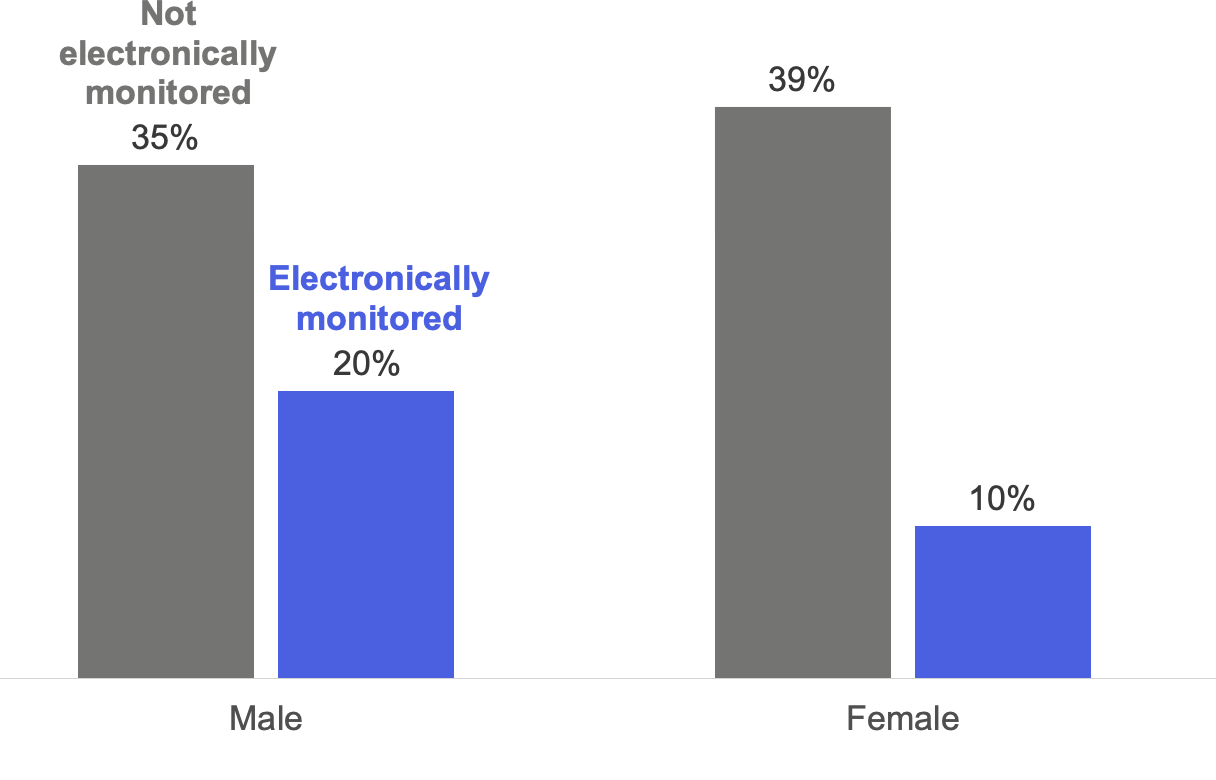
Electronic monitoring reduces recidivism among mandatory supervised release offenders. Electronic monitoring reduces both the likelihood and the speed of reoffending among mandatory supervised release offenders. Quasi-experimental analysis indicates between a 13.0 and 14.8 percentage point decrease in reincarceration. For male offenders, there was an overall 15 percentage point reduction in reincarceration. For female offenders, the reduction was 29 percentage points. See Figure 5.
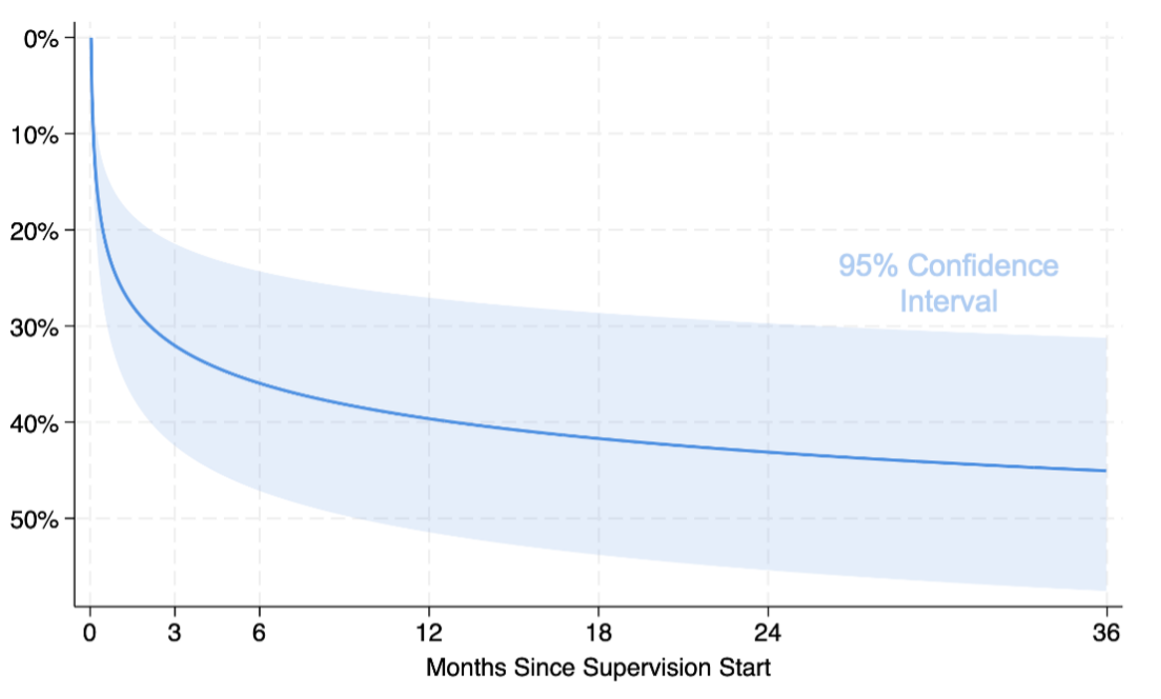
The positive effects of electronic monitoring were shown to strengthen over time for mandatory supervised release offenders. On average, there was a 45.5% reduction in the risk of reincarceration 36 months after supervision began. This positive effect was also observed after offenders were removed from electronic monitoring. See Figure 6.
Electronic monitoring cost $6.03 per prison day avoided for offenders on mandatory supervised release. The total marginal cost associated with electronic monitoring for mandatory supervised release offenders is $1.36 million. The average avoided prison days for each of the roughly 2,237 mandatory supervised release offenders total to an estimated 225,977 prison days avoided in FY25. On average, these offenders remained free from incarceration 101 days longer than those that were not on electronic monitoring. This means the Bureau’s cost to produce one avoided prison day is about $6.03. This number does not account for the benefits of avoided incarceration.
A follow-up evaluation should be conducted to determine the marginal cost of a prison day and the other benefits associated with reduced crime and avoided incarceration.
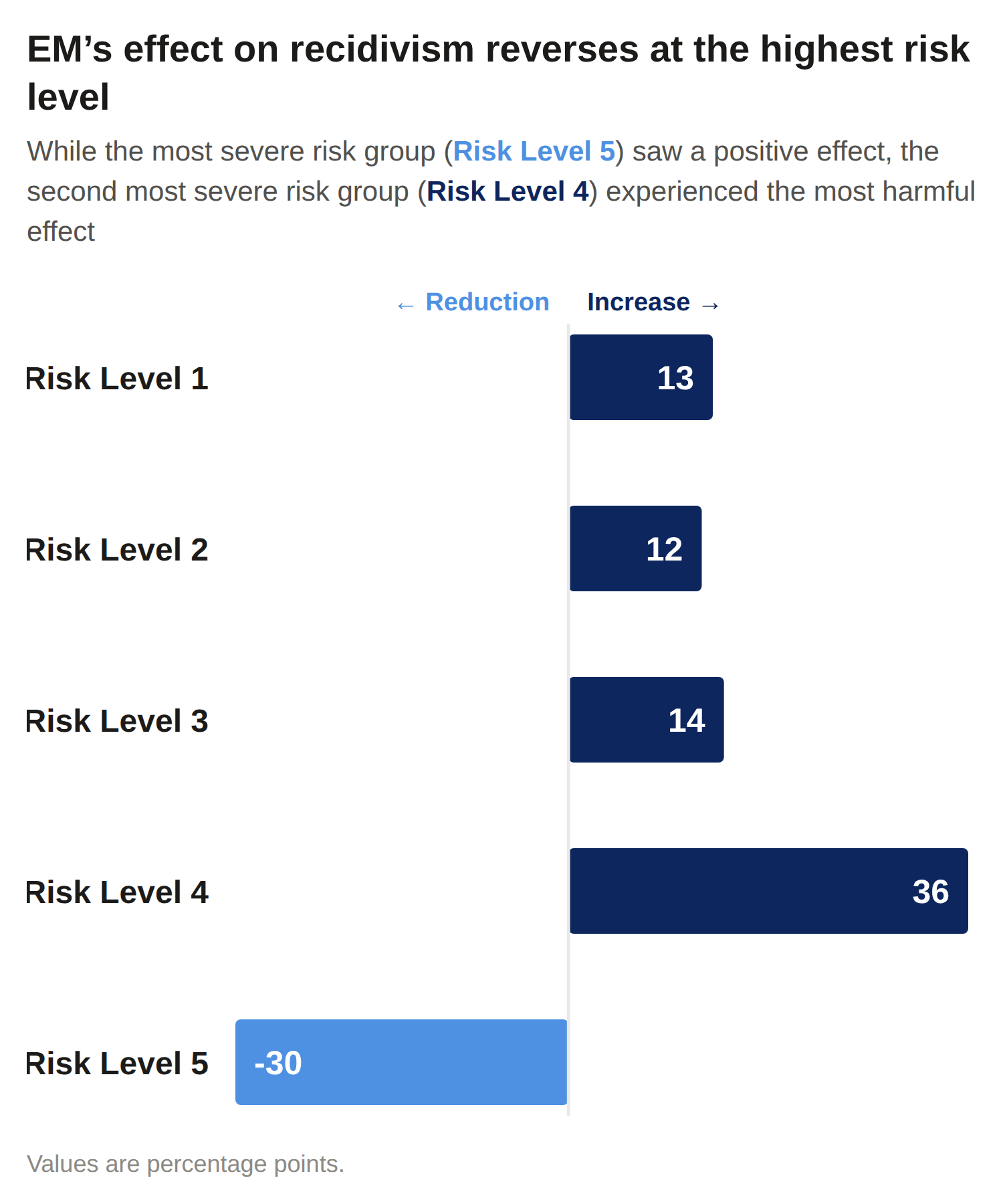
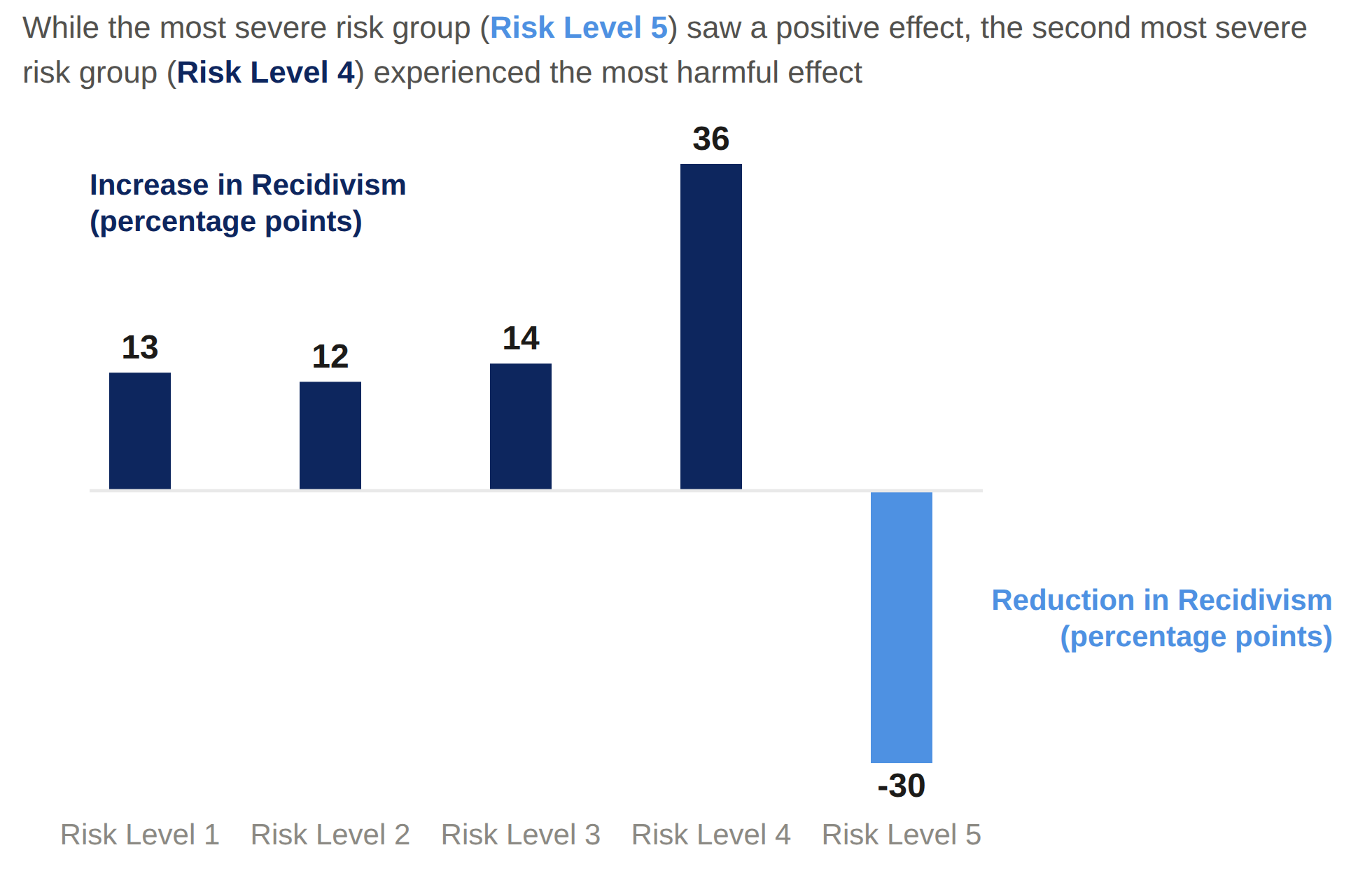
Electronic monitoring may have harmful effects on probationers, particularly those assigned a lower risk. During the study period, the recidivism rate for probationers who received electronic monitoring was 15 percentage points higher than those who did not receive electronic monitoring. While the results are statistically significant,4 the age of the offender at the start of supervision could not be appropriately balanced between the two groups. The group of probationers who received electronic monitoring was a slightly younger overall population. Since age is associated with recidivism, this variable could influence the overall results.
Among probationers, those with the highest assigned risk level – Risk Group 5 – did see a positive effect from electronic monitoring, but the overall number of probationers (106) assigned to this group was low. Additionally, the increased incarceration among Risk Group 4 contributes more than 25% to the overall negative effect. See Figure 8.
Unlike mandatory supervised release, probationers are subject to decisions of individual judges regarding both terms of supervision and violations. Electronic monitoring could result in more technical violations in which judges may be more likely to turn to incarceration for these violations.
Due to the limitations of the population in this study, a follow-up evaluation of probationers on electronic monitoring should be conducted to determine the effect of electronic monitoring. If possible, the evaluation should utilize a randomized control design.
Conclusion
Electronic monitoring is working well for the population it was expanded to serve. Among mandatory supervised release offenders, monitoring decreases reincarceration roughly 14 percentage points, keeps offenders free from prison over 100 days longer, and does so at a cost of less than $7 per avoided prison day. However, the result for probationers is different. While electronic monitoring should continue to be targeted for mandatory supervised release, follow up evaluations should be done to determine other best use cases.
Notes
- In 2024, Section 15-22-26.2 was amended again to make it a Class D felony to “alter, disable, deactivate, tamper with, remove, damage, or destroy any device used to facilitate electronic monitoring.” Back
- ACES grouped offenders based on the Bureau’s highest level of supervision type. Mandatory supervised release = Mandatory Release and Mandatory Release & Probation. Parole = Parole and Probation & Parole. Probation = Probation. During FY25, there were 166 offenders with a supervision type that did not fit into those three categories. Back
- Reentry refers to the transition of offenders from prison or jail into the community and its associated outcomes. Source | Bureau of Justice Statistics Back
- p < .05 Back
Citations
- Ala. Code §§ 15-22-26.2 and 29 (1975). https://alison.legislature.state.al.us/code-of-alabama Back
- Act No. 2024-107, 2024 Ala. Acts. https://alison.legislature.state.al.us/files/pdf/SearchableInstruments/2024RS/HB127-enr.pdf Back
- Alabama Bureau of Pardons and Paroles. (2022, August 4). Alabama Bureau of Pardons and Paroles to begin statewide electronic monitoring program. ABPP News Release. https://paroles.alabama.gov/2022/08/04/alabama-bureau-of-pardons-and-paroles-to-begin-statewide-electronic-monitoring-program/ Back
- Id. Back
- Bureau of Justice Statistics. (2021, May 26). National recidivism and reentry data program. U.S. Department of Justice, Office of Justice Programs. https://bjs.ojp.gov/recidivism-program Back
- U.S. Sentencing Commission, “The Effects of Aging on Recidivism Among Federal Offenders,” December 2017. https://www.ussc.gov/sites/default/files/pdf/research-and-publications/research-publications/2017/20171207_Recidivism-Age.pdf Back
Data & Methodologies
ACES combined the results of a quasi-experimental reincarceration recidivism study with a cost-modeling evaluation to develop the efficiency and cost-effectiveness benchmarks in this evaluation. Costs were derived and estimated based on FY25 offender and expenditure numbers while outputs and outcomes were computed from a random sample population from May 7, 2020, through September 1, 2025. The longer period of the study was necessary to capture the largest number of mandatory supervised release offenders who were not placed on electronic monitoring and to perform long-term outcome analysis. A deconvolution fit analysis was conducted to ensure that the random sample remained representative of the FY25 population from which costs were derived.
Outcome Analysis – Reincarceration Recidivism
ACES obtained the sample data sets from the Alabama Bureau of Pardons and Paroles (Bureau) and Alabama Department of Corrections (ADOC). Offender level supervision records from the Bureau provided information on electronic monitoring status, supervision type, supervision start and end date, risk level, demographics, and most severe offense type grouped by ACES crime categories. ADOC transactional records were linked to the Bureau records using the AIS number to identify recidivism events. The observation period spans supervision dates beginning May 7, 2020, through September 1, 2025.
Data Cleaning
Supervision Type Classification
The dataset included offenders with combined supervision types. These were recoded into three supervision types.
- Mandatory Supervised Release = “Mandatory Release” and “Mandatory Release & Probation”
- Parole = “Parole” and “Probation & Parole”
- Probation = “Probation”
Risk Level Recoding
Risk groups were categorized as groups 1-5 going from low to high risk.
- Group 1 = risk level “BCL” (Banked Case Load) and “BCL Mail” (Banked Case Load Mail)
- Group 2 = risk level “Low”
- Group 3 = risk level “Moderate”
- Group 4 = risk level “High”
- Group 5 = risk level “Intensive”
Cleaning of ADOC Transactional Data
ADOC provided transactional records capturing custody events for incarcerated offenders. Each record had dates for up to three of the following events: admission, ADOC custody, and release. For the purpose of the analysis, each record was expanded into multiple records based on the number of event dates, allowing a single record to represent one continuous period of supervision per offender.
Blank AIS Numbers
Records from the Bureau with blank AIS numbers could not be linked to ADOC transactional records and were handled differently by supervision type. Mandatory Release and Parole records without an AIS number were excluded. Probation records without an AIS number were kept and assumed that there were no recidivism events during the study period.
Accidentally Placed on Supervision
The Bureau noted that sometimes offenders are placed on electronic monitoring and then determined to not be eligible for release. To account for this, any offender whose supervision period lasted fewer than six days (≤5) was removed from the study. Additionally, any offender whose electronic monitoring start date and electronic monitoring end date were fewer than six days apart (electronic monitoring end date – electronic monitoring start date ≤5) was also removed.
Release Type
Three release types required special handling in the transactional data: death, outside agency release error, and “dunk”.5
“Death” indicates that their time in the model ends at their last recorded event. Under normal circumstances, a release date would mark the beginning of a free period during which an offender has the opportunity to reoffend. Because a deceased offender cannot reoffend, no following free period was created for these cases.
“Outside agency release error” indicates that the offender should not have been released. These cases were reviewed and handled manually on a case-by-case basis. Each offender’s time segments were updated so that their following return to custody was not incorrectly counted as a new recidivism event.
“Dunk” indicates the record was flagged and the period of incarceration associated with that release was excluded from a recidivism event as this is a type of supervision sanction not a full return to custody.
Follow up Window and Censoring
The full study window spanned from May 7, 2020, to September 30, 2025. Offenders were observed from the supervision start date for 36 months6 or until September 30, 2025, whichever came first. Records outside of this timeframe were dropped and period end dates were censored when needed. Offenders who began supervision after September 30, 2022, were unable to be followed for a full three-year period because of the study end date of September 30, 2025.
Electronic Monitoring Start Dates
Some offenders had multiple electronic monitoring start dates on record. In these cases, the earliest start date was used as the offender’s supervision start date. This reflects the beginning of their monitored supervision period.
Community Corrections
In the ADOC transactional data, some offenders were released from a community corrections program. Due to the different conditions of a community corrections program compared to standard incarceration, ACES ran the model accounting for instances of community corrections in two different ways:
- Time spent in community corrections is treated the same as any other incarceration period. For example, the offender is considered not free and therefore not at risk of reoffending during that time.
- Community corrections time is effectively treated as non-incarcerated time, meaning the offender is at risk of reoffending during that period.
Both produced similar results, so the analysis presented in this report reflects the results of the first iteration.
Excluded AIS Numbers
There were five data conditions under which an AIS number was removed from the study entirely, because a logical timeline of supervision and incarceration could not be determined. 439 AIS numbers were excluded.
Outcome Variable
Recidivism was defined as any return to ADOC jurisdictional custody that was not classified as a “dunk.” A binary recidivism indicator was created at the offender level reflecting whether any qualifying ADOC admission occurred within each offender’s follow-up period, regardless of whether a full three-year period was available. For survival analysis, a recidivism flag was created at the episode level for each supervision period. This shows whether a qualifying ADOC admission occurred during that specific free period and allows the survival model to account for multiple events across multiple supervision periods for the same offender.
Binary Models
ACES used a binary recidivism indicator to measure whether an offender reoffended during the follow-up period. Logistic regressions were conducted to provide a baseline estimate of the association between electronic monitoring and recidivism. Because logistic regression does not account for observed differences between offenders who received electronic monitoring and those who did not, three additional approaches were used to improve covariate balance and assess the robustness of the findings: inverse probability weighting, propensity score matching, and augmented inverse probability weighting. These approaches reweight or match the comparison group on observed characteristics. All models included risk group, age at supervision start, violent offender status, sex offender status, race, and gender as covariates.
For all four approaches, the dataset was collapsed to one row per person using the first supervision episode. Before collapsing, a recidivism flag was created to indicate whether the offender had any recidivism events within the follow-up period.
An interaction analysis confirmed that the effect of electronic monitoring differs significantly across supervision types, meaning a pooled estimate combining all supervision types should not be used. Due to the differing effects of electronic monitoring, binary models were estimated separately within each supervision type: mandatory supervised release, Probation, and Parole.
Covariate balance after weighting or matching was checked using standardized differences. Values below 0.10 show acceptable balance. An overidentification test was used to check global balance in the IPW model. A p value above 0.05 confirms acceptable balance. In the supervision type probation, age at supervision start could not be fully balanced after weighting. The non-electronic monitoring group was older on average than the electronic monitoring group.
Within mandatory supervised release, the non-electronic monitoring comparison group is smaller than the electronic monitoring group (n=408 vs n=3,571). This can potentially be explained by the policy that requires mandatory supervised released offenders to be placed on electronic monitoring. Covariate balance was still achieved in the models, despite this imbalance.
Within the probation cohort, ACES conducted interaction analyses to assess whether the effect of electronic monitoring differs across risk levels, gender, violent offender status, sex offender status, and crime type. Only the risk group interaction was statistically significant. Risk Group 4 experienced a larger adverse effect than other risk groups, and a sensitivity check confirmed it contributed about four percentage points to the overall probation estimate. Risk Group 5 showed a reversal of the electronic monitoring effect. This finding should be interpreted with caution given the small sample size of risk group 5 (n=106).
Not all offenders in the sample have a full 3-year follow up period. Across all supervision types, the electronic monitoring group began supervision on average 12 to 15 months later than the non-electronic monitoring group. Because of this, the electronic monitoring group’s raw recidivism rates may be more understated than those of the non-electronic monitoring group. While this could affect the magnitude of the binary model estimates, the direction of the effects is supported by the survival analysis which produces similar findings among all supervision types. Unlike the binary models, survival analysis accounts for varying follow-up lengths.
Survival Analysis (Cox Hazards Model)
ACES used the Cox proportional hazards model to understand how quickly an offender on electronic monitoring reoffends within each supervision type compared to their non-electronic monitoring counterpart.
Kaplan-Meier survival curves and log-rank tests were estimated as unadjusted comparisons of time to reoffending between electronic monitoring and non-electronic monitoring groups within each supervision type. Cox proportional hazards models were then estimated for each supervision type, controlling for offender characteristics. Models included risk group, crime type, age at supervision start, violent offender status, sex offender status, race, and gender as covariates. For mandatory supervised release and probation, both the log-rank test and Cox models confirmed statistically significant differences in time to reoffending between electronic monitoring and non-electronic monitoring groups (p < .05). For parole, neither the log-rank test nor the Cox models found a statistically significant difference between groups, consistent with the binary model. Because of this, no conclusion about the effect of electronic monitoring on recidivism could be made within the parole cohort.
Time at risk was defined as days not incarcerated. Periods of incarceration were excluded from time at risk. The follow up period was censored at the earlier of three years from each offender’s supervision start date or September 30, 2025.
The model accounted for offenders who reoffended more than once during the follow up period. Each re-offense was treated as a separate event, and the model was stratified by event order allowing the baseline hazard to vary within each event. Standard errors were clustered at the offender level, and the Efron method was used to handle cases where multiple offenders reoffended on the same day.
The Link and Schoenfeld residuals test was used on each model. While all supervision types passed the Link test (p > .05), both mandatory supervised release and Probation failed the Schoenfeld residual test (p < .05). This indicates that the hazard ratio is not consistent over time. To control for this, the time varying coefficient model with log time was used to observe how the effect of electronic monitoring changes over time for the supervision types mandatory supervised release and probation.
Post Electronic Monitoring Analysis
ACES ran a separate analysis to observe if the effects of electronic monitoring remained after active supervision ends. For the electronic monitoring group, each offender’s time zero was reset to their actual electronic monitoring end date. The non-electronic monitoring group did not have supervision end dates. To account for this, the average electronic monitoring duration for each supervision type was added to their supervision start date to create an average end date (128 days for mandatory supervised release and 104 days for probation). All records ending before the new time zero were dropped. The first qualifying period for an offender was trimmed to begin at time zero, and recidivism was updated accordingly. After restructuring the data, the same process used for the binary models and Cox hazards models was replicated.
Cost Analysis
ACES used a mixed methods analysis to develop an estimated cost of electronic monitoring for FY25. For the quantitative analysis, ACES obtained vendor invoices, expenditure reports, eStart overtime reports, and payroll data covering salaries and benefits. This analysis was combined with site visits, interviews, and surveys to build an estimate for time spent on electronic monitoring duties that are not regularly tracked and reported. Cost was then calculated at three levels, with each level fully encompassed in the next: Marginal → Direct → Total.
Across all costing levels, FY25 personnel costs were used to approximate salaries and hourly rates. Additionally, benefits were calculated using an agency wide benefit rate (Total Employee Benefits / Total Personnel Expenditures).
Monte Carlo Simulation
A Monte Carlo simulation was used to develop a cost distribution at each level due to the fluctuating nature of enrollments and time spent on electronic monitoring tasks. Ten cost variables were simulated across 10,000 iterations. Results are reported as the mean of the simulated distribution, with a range of plus or minus one standard deviation, for each of the three cost levels.
Based on specific factors, each variable was assigned a distribution:
- Triangular – EM device fees, field officer installation labor, field officer alert, curfew, and clearing labor, after-hours alert monitoring labor, supervision staff overtime, and administrative time where estimates were available.
- Uniform – Non-definitive administrative time and IT Staff and systems.
- Fixed – EM program staff and data unit, which are recorded rather than estimated.
The ten variables were assumed to move together rather than independently, because the same conditions that raise one raise the others. No historical data exists from which to measure that relationship, so it was set at rho = 0.7. The model also allows each variable its own noise, so correlated variables still move somewhat separately. Active and inactive devices were assumed to move in opposite directions.
Marginal Cost
Marginal cost includes the variable costs that are directly associated with electronic monitoring. They include device fees and probation and parole officer overtime.
- Device Fees – ACES obtained and analyzed vendor invoices for FY25. In November of 2024 (the second month of the fiscal year), the unit price for active units and inactive units increased to $3.54 and $2.02, respectively. The amounts matched per unit prices as reported by the Bureau. Due to the change in per unit costs at the beginning of the fiscal year, the current rates were used to develop the cost estimates.
- Probation and Parole Officer Overtime – ACES obtained an overtime project tracking report covering FY23-25. The report provided the number of overtime hours attributable to electronic monitoring for each officer during a pay period. The data from this report was used to estimate a number of hours of overtime per offender on electronic monitoring in FY25. An average hourly wage was calculated for all probation and parole officers.
Direct Cost
Direct cost adds the salary and benefits for full-time program staffing. Combined with marginal cost of delivery, direct cost accounts for the actual dollars spent on electronic monitoring during the fiscal year.
- Full-time Program Staff – Full-time program staff are 100% dedicated to the operations of electronic monitoring for the Bureau. ACES obtained FY25 personnel expenditures for each full-time staff member and used the employee benefits factor to develop a full cost.
Total Cost
Total cost adds administrative overhead attributable to the program as well as after-hours alert monitoring, and certain probation and parole field officer labor. The added cost included in total cost amounts to the opportunity cost of labor directly tied to electronic monitoring functions. Those functions include the following:
- Administrative Time – The Bureau identified five members of senior leadership who regularly interact with the electronic monitoring program. Salaries for these employees were obtained, and benefits were calculated using the agency rate.
- IT Staff and Systems – The Bureau provided an estimated number of weekly hours for IT engagement and an hourly range of cost.
- Probation and Parole Officer Labor – ACES conducted site visits to observe time spent on routine electronic monitoring functions like installing and uninstalling monitoring devices. During these site visits, officers were interviewed about additional time spent on electronic monitoring duties through the regular course of the day. Through the observations and interviews, officers reported consistent time estimates for the duties. Two activities were estimated separately:
- Field installation of devices which covers both the physical installation of the device and setup within the monitoring system.
- Alert and curfew checks performed during the workday.
- After Hours Alert Monitoring – The Bureau uses existing staff located at the Perry County facility to monitor electronic monitoring alerts after regular business hours and on weekends. ACES obtained a report detailing these alerts and developed an estimated time spent monitoring and responding to alerts. FY25 personnel costs were used to calculate an average hourly wage of these employees.
Each activity was converted to annual hours using the reported time per task and the volume of tasks in FY2025, then priced at average wage estimates.
Notes
- A “dunk” is a period of confinement of not more than 45 days in either a jail, ADOC facility, or other approved residential transition center. Back
- See the Recidivism definition in Purpose and Scope of the Evaluation. Back